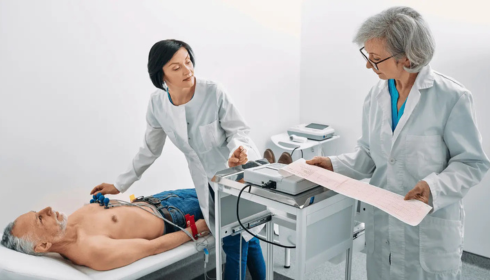
An ECG (electrocardiogram) is a simple test that records the electrical activity of your heart. Many people feel nervous before their first one, but the procedure is quick, painless and non-invasive.
You’ll usually be asked to lie down on a couch. Small sticky pads (electrodes) are placed on your chest, arms and legs. Wires connect these pads to the ECG machine. The machine then records your heart’s signals as lines on a graph.
You don’t feel any electric current; the machine is only reading, not sending electricity. You’ll be asked to lie still and breathe normally for a short time while the recording is taken – usually less than a minute.
The test shows heart rate, rhythm and some patterns that suggest previous or current heart strain or damage. It doesn’t tell everything about heart health, but it’s a useful, quick snapshot and often part of routine checks.
Afterwards, the pads are removed and you can return to normal activity immediately. Mild skin redness from the stickers usually settles quickly.